

Cash flow is one of the most important indicators of a business’s financial health, yet it is often misunderstood or overlooked. Many businesses appear profitable on paper but struggle day to day because cash is not available when it is needed. Understanding how cash moves through a business is essential for stability, growth, and confident decision-making.
This guide explains cash flow in a practical, easy-to-follow way. It focuses on how money moves in and out of a business, why timing matters, and how business owners can improve visibility and control without overcomplicating their finances.
Cash flow refers to the movement of money into and out of a business over a period of time. It shows whether a business has enough cash available to pay its expenses, invest in growth, and handle unexpected costs.
At a basic level:
When inflows exceed outflows, the business has positive cash flow. When outflows exceed inflows, cash pressure begins to build. This pressure can exist even when sales are strong or profits look healthy.
Profit and cash flow are not the same. Profit is calculated after income and expenses are recorded, while cash flow focuses on when money is actually received or paid.
A business can be profitable but still struggle if:
Cash flow determines whether a business can meet its obligations on time. Rent, wages, supplier invoices, and loan repayments all require cash, not profit figures.
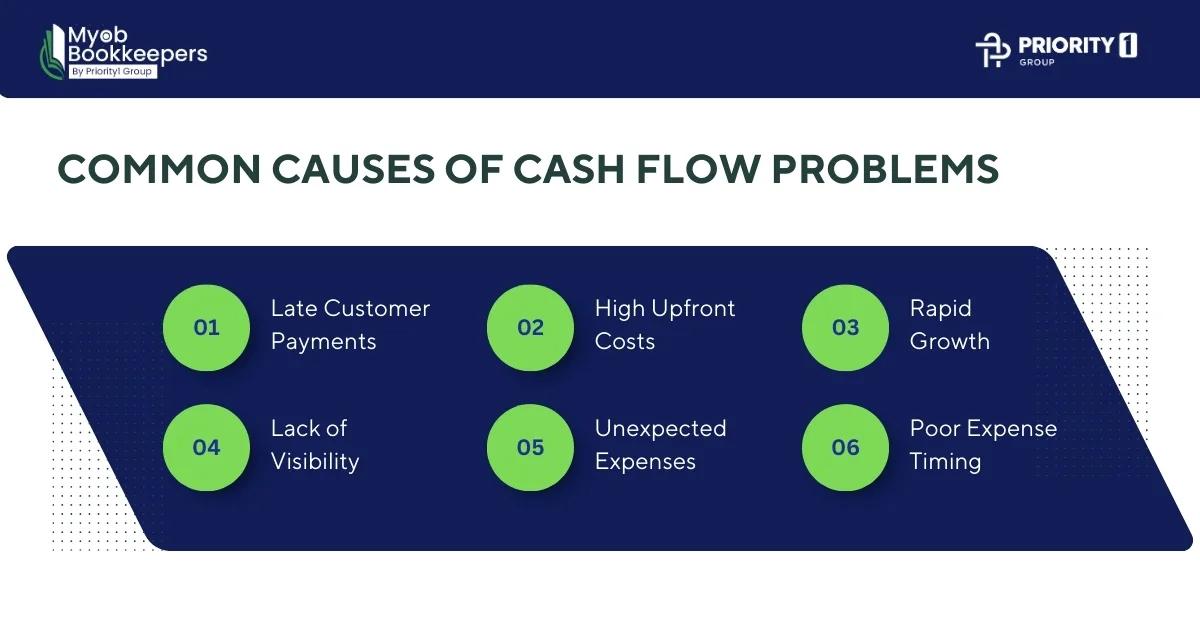
Many cash flow issues are not caused by poor business performance, but by timing mismatches and a lack of financial structure. Even profitable businesses can experience cash pressure if inflows and outflows are not aligned.
When invoices are not paid on time, cash inflow slows down despite sales being recorded. This delay can make it difficult to cover regular expenses such as rent, wages, or supplier payments, creating unnecessary financial strain.
Some businesses must pay for stock, materials, rent, or services well before generating income. These upfront costs can create short-term cash gaps, particularly if sales cycles are long or unpredictable.
While growth is positive, it often increases expenses faster than income. Hiring staff, expanding operations, or purchasing additional resources can place pressure on available cash if growth is not carefully planned and monitored.
Without clear tracking and regular review, it becomes difficult to anticipate upcoming shortfalls. Poor visibility can result in missed warning signs, leaving businesses to react to problems rather than plan ahead.
Unplanned costs such as equipment repairs, urgent maintenance, or sudden price increases can disrupt cash flow if there is no financial buffer in place.
Paying expenses too early or without aligning them to incoming funds can drain cash unnecessarily, even when sufficient income is expected later.
Understanding both sides helps business owners anticipate pressure points and plan ahead.
Cash does not move in isolation it flows through daily business operations in predictable patterns. In many cases, a sale is made, an invoice is issued, and payment is received weeks later. During this waiting period, the business must still pay expenses such as rent, wages, and supplier bills. This timing gap between income and expenses is where cash pressure often arises. When these patterns are understood and monitored regularly, businesses can plan ahead, prioritise payments, and reduce unexpected shortfalls. Recognising how cash moves helps owners stay prepared and make confident financial decisions.
Cash flow forecasting is about looking ahead rather than reacting after problems arise. A forecast estimates future inflows and outflows based on known commitments and expected income.
A simple forecast helps businesses:
Even a basic monthly forecast can significantly improve financial control.
Economic changes, seasonal fluctuations, and unexpected events can all impact cash flow. Businesses that monitor their numbers regularly are better prepared to adapt.
Helpful practices include:
These habits improve resilience and reduce stress during challenging periods.
Clear systems play a major role in improving financial clarity. Accurate bookkeeping ensures that cash movements are recorded correctly and consistently.
With proper systems in place, businesses can:
This visibility is the foundation of effective cash flow management, allowing business owners to stay in control rather than react under pressure.
When cash flow is clear and predictable, business decisions become more confident and strategic. Business owners can plan hiring without fear of overcommitting, invest in equipment at the right time, and negotiate better terms with suppliers. Clear cash visibility also reduces reliance on short-term borrowing, helping businesses avoid unnecessary debt. In contrast, uncertainty around cash flow often forces conservative or rushed decisions, such as delaying growth opportunities or reacting to short-term pressure. By understanding cash movement and planning ahead, businesses can make informed decisions that support stability, growth, and long-term success.
Cash flow is not a “set and forget” area of finance. Regular review helps ensure that assumptions remain accurate and plans stay relevant.
Consistent review allows businesses to:
This ongoing attention supports long-term sustainability.
Cash flow is the heartbeat of a business. When it is visible, controlled, and well understood, it supports stability, growth, and better decision-making. Businesses that actively monitor how money moves in and out are better equipped to handle challenges and take advantage of opportunities.
If you want to streamline your financial operations, gain clearer visibility over cash movement, and make stronger strategic decisions, working with Myob Bookkeepers, part of Priority1 Group, can support you in building clarity, control, and confidence in your numbers.