
Payroll sits at the intersection of people, money, and trust. While many businesses focus on processing pay runs correctly, fewer pay attention to the quality of the records behind them. Clean payroll bookkeeping is not just an administrative task; it plays a vital role in financial accuracy, cash flow visibility, and long-term business stability.
When payroll records are inconsistent or poorly maintained, issues often surface later in the form of reporting errors, employee disputes, or unexpected financial pressure. Clean payroll bookkeeping helps prevent these problems by ensuring payroll data is accurate, traceable, and integrated properly into the broader bookkeeping framework.
Payroll bookkeeping goes beyond paying employees on time. It focuses on how payroll transactions are recorded, classified, and maintained within the business’s financial records.
Key elements include:
When these elements are handled correctly, payroll data supports reliable financial reporting and informed decision-making.
Payroll is high-risk because it combines frequent transactions with strict accuracy expectations. Even small inconsistencies can quickly compound.
Common payroll bookkeeping issues include:
These issues often remain hidden until financial reports are reviewed or cash flow pressure appears.
Payroll is a significant expense for most businesses and flows directly into profit and loss statements. If payroll bookkeeping is messy, financial reports lose reliability.
Clean payroll bookkeeping ensures:
This accuracy gives business owners confidence in the numbers they rely on to assess performance.
Payroll is a recurring cash commitment. Without clean records, it becomes difficult to predict upcoming obligations or identify potential shortfalls.
Accurate payroll bookkeeping helps businesses:
Clear payroll records play a key role in maintaining steady cash flow.
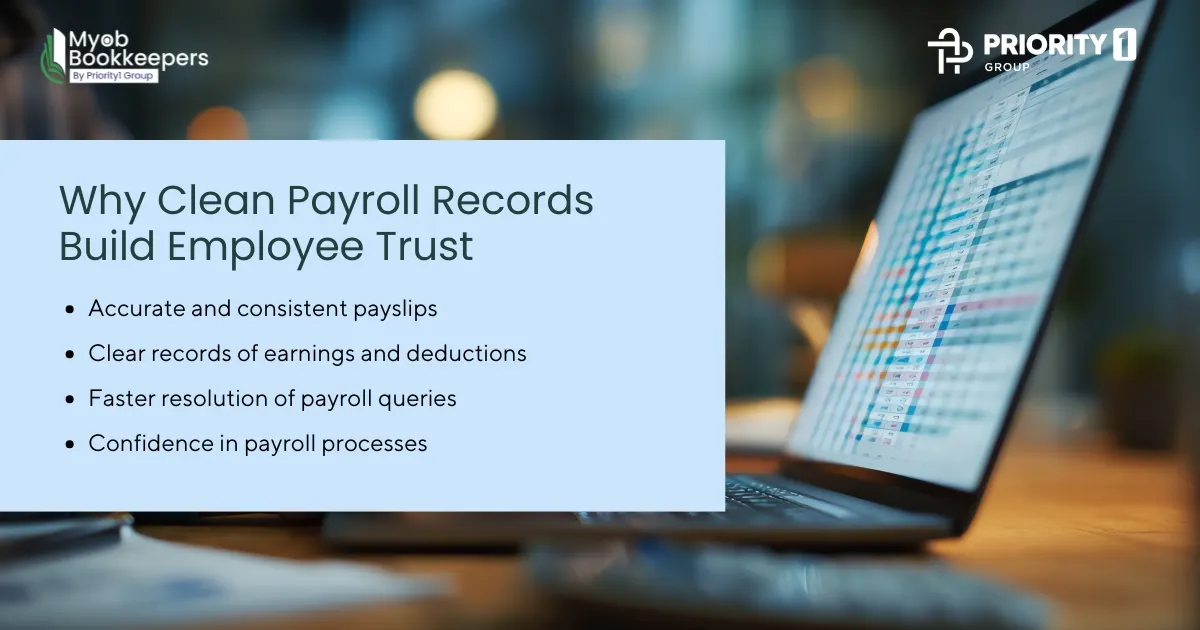
Employees expect to be paid correctly and consistently. Even minor payroll errors can affect morale and trust.
Clean payroll bookkeeping supports:
Reliable payroll records contribute to stronger employer-employee relationships and a more stable workplace.
A structured approach to payroll bookkeeping brings order, clarity, and confidence. Businesses benefit from processes that are documented, repeatable, and transparent.
Well-structured payroll systems:
You can learn more about structured approaches through professional payroll management services
As businesses grow, payroll complexity increases. Deciding how payroll is handled becomes more important.
Understanding the difference between in-house vs outsourced payroll accounting can help businesses:
Some industries face additional payroll complexity due to regulatory requirements. In these environments, clean payroll bookkeeping becomes even more critical.
Sector-specific considerations often include:
For disability service providers, NDIS payroll management requires particular care due to award structures and funding accountability. Additional insight is available here:
Businesses should review their payroll bookkeeping if they experience:
These signs often indicate deeper structural issues that need addressing.
As businesses scale, payroll volume and complexity increase. Clean bookkeeping provides a foundation that supports growth without losing control.
Strong payroll records help businesses:
Growth becomes more sustainable when payroll bookkeeping remains organised and reliable.
Payroll bookkeeping is not just an operational task it is a strategic asset. When records are clean and reliable, businesses gain clearer visibility into costs, obligations, and financial health.
Clean payroll bookkeeping:
Over time, these benefits compound, making payroll bookkeeping an area worth consistent attention.
Clean payroll bookkeeping matters far more than many businesses realise. It underpins financial accuracy, supports cash flow planning, strengthens trust, and reduces risk. When payroll records are structured and reliable, businesses gain clarity and confidence in their numbers.
If you’re looking to simplify payroll processes, improve financial visibility, and reduce the stress associated with payroll administration, working with a Myob Bookkeepers from Priority1 Group can help you build a more accurate, organised, and dependable payroll system that supports long-term business success.