Cash flow is the oxygen of every business. It’s what keeps wages paid, suppliers happy, rent covered, and opportunities within reach. Yet plenty of Australian businesses that look “profitable” on paper still feel constantly short on cash. The reason is usually simple: money is coming in and going out, but the timing, tracking, and decisions around it aren’t being managed with enough clarity.
Proper bookkeeping isn’t just compliance or data entry. Done well, it becomes a practical cash flow system: it shows what’s happening now, what’s likely to happen next, and what you should do before small leaks turn into major problems.
This blog explains how strong bookkeeping practices improve cash flow in real, measurable ways—without fluff—so you can build a business that’s not only busy, but financially stable.
Many owners assume higher revenue automatically equals healthier cash flow. But cash flow depends on timing more than totals. Common situations that squeeze cash include:
Without clean books, it’s hard to answer basic questions like: Which customers owe me right now? Which expenses are rising? How much GST should I keep aside? What will my cash position look like next month? That uncertainty is what creates the pressure.
Accurate bookkeeping helps you see your cash position clearly—what’s in the bank, what’s committed, and what’s still expected. When transactions are coded correctly and accounts are reconciled regularly, you avoid the “false confidence” of an inflated bank balance that’s actually earmarked for bills.
This visibility helps you make better day-to-day decisions: when to reorder stock, when to hold off on discretionary spending, and when to follow up overdue invoices.
Cash flow improves dramatically when invoicing is consistent and receivables are actively managed. Bookkeeping supports this by:
When your books are in order, you can set a rhythm: invoice promptly, follow up weekly, and reduce the “time-to-cash” cycle.
Many businesses leak cash through small, repeated costs—subscriptions, duplicate software, rising supplier charges, or “miscellaneous” purchases that add up. Proper bookkeeping reveals patterns.
Instead of cutting costs blindly, you can identify what’s actually hurting cash flow and what’s worth keeping. A clean set of accounts makes it easier to:
Tax obligations don’t usually cause cash flow issues because they’re “too high”—they cause issues because businesses don’t set cash aside early enough. Bookkeeping helps you stay ahead by keeping GST and PAYG visible, accurate, and planned for.
When you treat GST and super like “not your money” from the start, you reduce the end-of-quarter panic and avoid scrambling for funds.
Forecasting is only useful when the data underneath is correct. Proper bookkeeping creates reliable inputs for forecasting:
Even a simple rolling forecast (4–12 weeks) can reduce stress and improve decisions. You don’t need complex modelling—just clean data and consistency.
Paying suppliers on time matters, but paying strategically matters too. Bookkeeping helps you understand which payments can be scheduled, which suppliers offer better terms, and how to avoid bunching large expenses together.
With accurate payables tracking, you can plan payments in a way that protects cash without damaging relationships.
Mistakes in bookkeeping don’t just affect reports—they can directly affect cash. Examples include:
Each error might seem small in isolation, but together they create cash flow volatility. Proper bookkeeping reduces that risk.
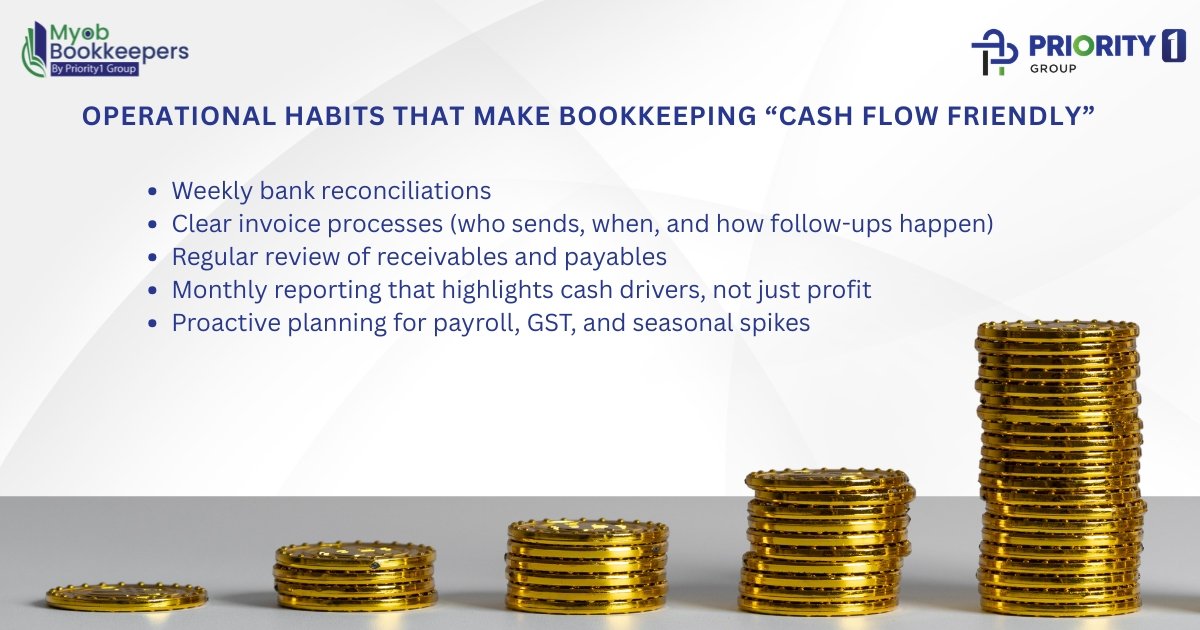
Good cash flow isn’t just about having software. It’s about routines. The businesses that stay steady usually commit to a few simple habits:
If you’re not sure where to start, a practical approach is to get your bookkeeping set up so it supports decisions, not just reporting.
Around the midpoint of your cash flow improvement journey, it can help to have a specialist review your setup and processes—especially if you’re using MYOB. For businesses looking for structured support, MYOB Bookkeepers is a part of Priority1Group that focuses on helping teams make their numbers easier to understand and act on, so cash flow decisions aren’t made in the dark. Many owners find that once the workflow is streamlined—reconciliations, invoicing rhythm, reporting cadence—cash flow becomes less reactive and more controlled. If you work with a MYOB bookkeeper, the goal should be more than tidy files: it should be better visibility, fewer surprises, and stronger financial habits that stick.
Payroll is often the biggest recurring outgoing—and it’s unforgiving. Late payroll or incorrect payroll creates stress, damages morale, and can lead to compliance problems. From a cash flow perspective, the key is predictability.
Proper bookkeeping supports payroll cash flow by:
If payroll is complex (multiple awards, rosters, overtime, allowances, contractors), cash flow planning becomes harder without solid systems. This is where working with a MYOB payroll specialist can bring clarity—because accuracy and timing matter as much as totals.
When bookkeeping is done properly, it stops being a “task you catch up on” and becomes a tool you use to run the business. The shift happens when you move from:
And you don’t need to overhaul everything overnight. Start small:
As these habits compound, the business becomes calmer and more resilient.
Cash flow problems rarely come out of nowhere. They build quietly through late invoicing, untracked spending, poor visibility of obligations, and decisions made without reliable data. Proper bookkeeping fixes that foundation. It improves timing, reveals patterns, reduces avoidable errors, and gives you the confidence to plan ahead—especially around big outgoings like payroll, stock, and quarterly liabilities.
If you want cash flow to feel less stressful, focus on building consistency in your bookkeeping process and making reporting something you actually use. For many Australian businesses using MYOB, partnering with a team that understands both the software and the operational side of cash flow can make the difference between “keeping records” and “running the business by the numbers.” That’s where MYOB Bookkeepers, a part of Priority1Group, can fit naturally into the picture, helping businesses strengthen day-to-day financial routines so cash flow becomes steadier, payroll stays predictable, and the business has room to grow. If you’re already working with a MYOB bookkeeper or considering a MYOB payroll specialist, the best outcome is simple: clearer visibility, fewer surprises, and better control over your cash.