

For many small business owners, bookkeeping starts off simple: a few invoices, a few bills, a bank feed, and a spreadsheet “just in case.” But as soon as your business gets busier, the numbers stop being a background task and start affecting your cash flow, compliance, and decision-making.
Hiring a bookkeeper isn’t only for “big businesses.” In Australia, it’s often the difference between being confidently on top of your BAS periods and payroll obligations, or constantly catching up, guessing, and hoping nothing has been missed. The key is knowing the right moment to bring in help, before the admin becomes expensive stress.
Below are the most practical signs it’s time, what a bookkeeper should take off your plate, and how to hire in a way that gives you control, not confusion.
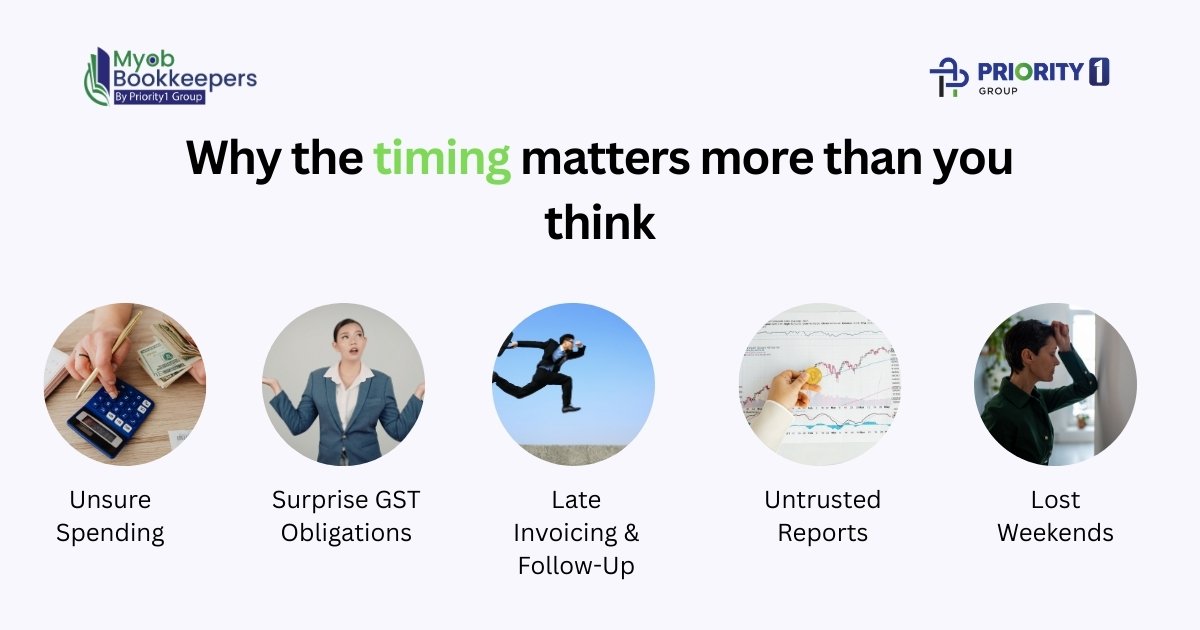
Bookkeeping problems rarely show up as “bad bookkeeping.” They show up as:
If you wait until you’re already behind, the first stage becomes clean-up, not support. That can cost more, take longer, and create avoidable pressure.
Hiring at the right time means your bookkeeper spends most of their effort keeping things clean and consistent, rather than rebuilding months of messy data.
If bookkeeping is taking more than 2–3 hours per week, it’s no longer a “small task.” For most owners, those hours are better spent on lead generation, customer service, delivery, and strategy.
A simple check: if you delay invoicing, forget to reconcile, or avoid looking at your numbers because it feels overwhelming, your bookkeeping is already impacting revenue.
Many small businesses accidentally use the bank balance as a financial strategy. But your bank balance doesn’t show upcoming bills, tax set-asides, super, or whether your profit is real.
A bookkeeper helps you see what is actually yours to spend, and what needs to be reserved.
BAS stress is usually a symptom of inconsistent coding, missing documentation, unreconciled accounts, or transactions sitting in suspense.
When BAS becomes a scramble, you risk errors, rework, and cash flow shocks. A bookkeeper builds routines that make BAS prep predictable.
Payroll feels manageable until it isn’t. Adding employees, changing hours, allowances, overtime, or leave creates more moving parts. Even if you’re using software, payroll relies on correct setup and consistent processing.
If you’ve started second-guessing wages, leave balances, or whether everything was filed correctly, it’s time to bring in support.
Software is a tool, not a solution. If your reports don’t match what you “feel” is happening, it usually means the file isn’t being maintained properly.
This is where the right support matters. If you use MYOB, working with a MYOB bookkeeper can help turn the platform into something you actually trust, not just something you “have.”
Growth should feel exciting, not chaotic. But when sales rise, everything multiplies: transactions, receipts, supplier bills, customer payments, and payroll complexity.
If your business is scaling, bookkeeping becomes an operational system, not a back-office chore.
You don’t need to panic, but you should treat it as a signal. Often, these situations are triggered by small inconsistencies that compound over time.
A bookkeeper can review what’s happening in the file, improve the process, and help prevent repeats.
Even if nothing feels broken, these moments usually justify hiring:
If you recognise one or more of these, you’re likely at the stage where bookkeeping needs structure, not willpower.
A bookkeeper’s role is to build rhythm, accuracy, and visibility. Depending on your business, that may include:
The goal isn’t “doing your books.” The goal is creating a system where you always know where the business stands.
Best if:
Watch-outs:
Outsourcing bookkeeping is best if:
Watch-outs:
Some businesses keep basic admin in-house (like collecting receipts) and outsource reconciliations, payroll support, and reporting for accuracy and oversight.
If you answer “yes” to two or more, it’s probably time:
A bookkeeper should understand your type of business and the software you rely on. If you run MYOB, look for someone who can explain processes clearly and spot issues early.
In practice, businesses often get the best outcome when they work with a certified MYOB bookkeeper who can support clean setup, consistent reconciliations, and reporting you can rely on.
A good bookkeeper should be able to explain:
You want a bookkeeper who can translate numbers into decisions. Clear communication is part of the service, not an extra.
Many owners delay hiring because they think the transition will be messy. It doesn’t have to be, as long as you start with a simple handover:
This is also where an experienced team helps. For example, myobbookkeepers is a part of Priority1 Group, and that broader group experience often matters because small businesses don’t just need data entry, they need a repeatable bookkeeping system that holds up as they grow.
A small business should hire a bookkeeper when bookkeeping starts to affect cash flow, confidence, compliance, or the owner’s time. The earlier you set up a clean rhythm, the easier everything becomes: BAS prep, payroll confidence, decision-making, and planning for growth.
If you’re noticing signs like delayed invoicing, unreliable reports, or quarterly stress, the right next step is to get support and build a system that keeps you ahead. And if you’re already using MYOB, partnering with a MYOB bookkeeper who understands Australian small business realities can make the difference between “keeping records” and actually running the business with clarity.
If you’d like a more structured bookkeeping workflow (without overcomplicating it), Priority1 Group teams, including myobbookkeepers, typically focus on building consistent processes that keep your numbers reliable month after month, so you can spend more energy on the business itself, not the admin.