
Bookkeeping mistakes do more than create messy records. In many cases, they increase the chance of ATO scrutiny, delay lodgements, distort cash flow decisions, and create unnecessary pressure when it is time to review payroll, GST, or BAS obligations. For Australian businesses, even small errors can become costly when they happen repeatedly or remain unresolved over multiple reporting periods.
The ATO does not expect every business owner to be a technical expert. What it does expect is that records are accurate, complete, and supported by reasonable processes. When figures do not align, payments are inconsistent, or reporting patterns appear unusual, that can draw attention. The issue is often not one dramatic mistake, but a series of weak bookkeeping habits that make the financial picture look unreliable.
This is why bookkeeping should be treated as more than administration. Professional bookkeeping protects compliance, improves reporting quality, and gives business owners a clearer understanding of what is really happening inside the business. When records are current and properly reviewed, problems can be identified early rather than during an ATO query or year-end cleanup.
ATO attention is often triggered by inconsistencies. That might include GST claims that do not match the underlying transactions, payroll figures that do not align with reporting, or deductions that appear unusually high compared with the size or type of business. When records are incomplete or coded incorrectly, the business may lodge information that does not reflect reality.
This is where many owners get caught off guard. They assume the issue is tax-related when the real problem started much earlier in the bookkeeping process. If data entry, reconciliations, payroll setup, and expense classification are not handled properly, every report built on that data becomes less reliable.
Accurate bookkeeping does not guarantee a business will never be reviewed, but it does reduce the likelihood of avoidable errors and makes it far easier to respond confidently if questions arise.
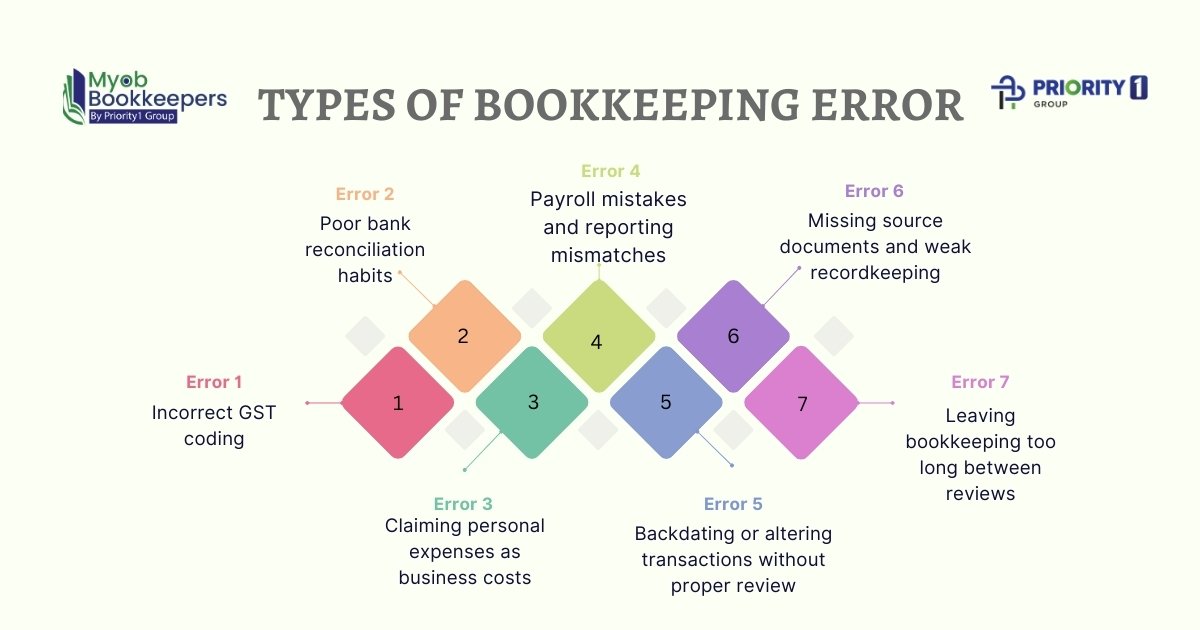
One of the most common bookkeeping mistakes is incorrect GST treatment. Transactions may be coded as GST-inclusive when they should be GST-free, or input-taxed items may be treated incorrectly. In some businesses, staff use default codes without checking the type of purchase or sale. Over time, these small mistakes affect BAS reporting and can produce figures that look inconsistent from one period to the next.
GST errors can happen with supplier bills, mixed-use expenses, imports, entertainment, and motor vehicle costs. They are especially common when businesses rush transaction processing or rely too heavily on assumptions. A business owner might think the software will automatically get everything right, but software still depends on correct setup and informed review.
A qualified MYOB bookkeeper can help identify recurring GST issues before they flow into lodgements, especially where transaction volume is increasing and manual checks are being skipped.
Bank reconciliations are one of the clearest indicators of bookkeeping quality. When accounts are not reconciled regularly, it becomes harder to verify whether recorded transactions actually reflect what happened in the bank. Duplicate entries, missed expenses, uncleared items, and unexplained differences can remain in the file for months.
From a compliance perspective, this matters because unreconciled accounts weaken confidence in the reports being used for BAS, cash flow planning, and financial review. If sales, expenses, or payroll amounts are wrong because the bank accounts have not been properly matched, the business may submit inaccurate figures without realising it.
Regular reconciliation is also one of the easiest ways to catch fraud, bank errors, or accidental miscoding. A business that delays this task until quarter-end is more likely to miss patterns that should have been addressed much earlier.
Another bookkeeping mistake that can trigger ATO attention is poor separation between personal and business spending. This often happens in small businesses where owners use one card for mixed purchases or reimburse themselves without clear documentation. The risk grows when bookkeeping records include meals, travel, fuel, subscriptions, or household costs that have not been properly assessed for business use.
Even when the amounts seem minor, repeated misclassification creates a pattern. If the business claims deductions that cannot be supported or appears to overstate business expenses, that may raise concerns during review.
Strong bookkeeping controls matter here. Business owners should maintain clear records, keep receipts, and document the business purpose of purchases. Where private use exists, the treatment should reflect that rather than forcing everything into a business expense category.
Payroll errors can attract attention quickly because they affect employees, superannuation, PAYG withholding, and reporting obligations. Common problems include incorrect award interpretation, missed super payments, duplicate wages, or differences between payroll reports and the general ledger.
Single Touch Payroll has made payroll reporting more visible and more immediate. That means errors are not always hidden until year-end. If wage figures, PAYG, or super obligations are inconsistent, it becomes easier for those mismatches to stand out.
Businesses often run into trouble when payroll is set up once and then left unchanged as staffing, pay rates, and obligations evolve. A review process is essential. This is especially true when a business grows from a simple owner-operated setup into a team environment with leave accruals, overtime, allowances, and different employment arrangements.
At this stage, many businesses find value in more structured support. Myob Bookkeepers is a part of Priority1 Group, and that broader experience can be useful for businesses that want cleaner systems, stronger reporting discipline, and less risk around day-to-day compliance. Working with a certified MYOB bookkeeper can help ensure payroll processes are not only functional, but accurate and reviewable.
Backdated adjustments are sometimes necessary, but frequent changes made without explanation can create confusion and distort reporting. Business owners or staff may edit prior transactions to “fix” a problem quickly, not realising they are affecting a lodged BAS period, changing reconciliation results, or creating discrepancies in the audit trail.
This becomes risky when there is no documentation for why the change was made. If the financial records show regular alterations without a clear process, it undermines confidence in the integrity of the file.
A better approach is to correct errors transparently, with notes where needed, and to review whether the change affects any already-lodged obligations. Clean bookkeeping is not just about accuracy today; it is also about preserving a reliable history.
A transaction in the software is not enough on its own. Businesses also need source documents such as invoices, receipts, payroll records, and supporting notes. Without these, it becomes harder to justify claims, confirm business purpose, or explain unusual entries.
This issue often surfaces when businesses rely on memory, paper receipts stored inconsistently, or incomplete digital attachments. The bookkeeping file may appear complete at first glance, but if the supporting evidence is missing, the business is exposed.
Recordkeeping discipline is a key part of EEAT in practice. It shows experience through consistent processes, expertise through correct treatment, authoritativeness through reliable reporting, and trustworthiness through evidence that supports each position taken.
A common pattern behind many errors is delay. Transactions pile up, invoices remain uncoded, bank accounts go unreconciled, and BAS preparation becomes a rushed effort to “get everything in.” When bookkeeping is treated as a catch-up task instead of a routine business process, accuracy usually suffers.
The longer errors remain untouched, the harder they are to untangle. Missing receipts are harder to find, transaction details are forgotten, and staff changes can leave knowledge gaps. This is where bookkeeping moves from a routine function to a compliance risk.
Consistent monthly review is often more effective than heroic quarter-end cleanup. It allows businesses to spot unusual trends, correct mistakes early, and maintain confidence in the numbers they rely on for decisions.
The best defence is not fear. It is process. Businesses that reduce risk usually do a few things well: they separate business and personal spending, reconcile accounts regularly, review GST treatment carefully, maintain payroll accuracy, and keep supporting documents organised.
It also helps to have someone looking at the file with fresh eyes. An experienced MYOB bookkeeper can often spot patterns that internal teams miss, particularly when the same shortcuts have been repeated for a long time. Likewise, a certified MYOB bookkeeper brings system knowledge that helps ensure the software reflects the real compliance needs of the business rather than just acting as a place to store transactions.
ATO attention is not always triggered by one major event. More often, it comes from patterns of inconsistency, incomplete records, poor coding, and reporting that does not stand up to review. That is why bookkeeping should never be treated as a low-priority admin task. It is part of the foundation of business compliance, visibility, and control.
For Australian businesses, the goal is not only to avoid problems but to build confidence in the numbers. When records are accurate, reconciliations are current, and obligations are reviewed properly, the business is in a much stronger position to lodge correctly and respond calmly if questions ever arise.
As businesses become busier, many owners find that stronger bookkeeping support creates more than compliance benefits. It also improves decision-making and reduces stress. Myob Bookkeepers, as part of Priority1 Group, sits naturally in that kind of support structure, helping businesses maintain cleaner financial records and more reliable reporting without losing sight of the bigger picture.