
In business, there’s no room for error, especially when it comes to the Australian Taxation Office (ATO) and your financial obligations. One of the common misconceptions many business owners have is that the ATO will understand if they “didn’t know” about a particular tax law or obligation. Unfortunately, this is far from the truth. The ATO holds businesses to a high standard of financial compliance, and ignorance is not an acceptable defense, therefore it is very important that you understand ATO Compliance. This is where effective bookkeeping and adherence to compliance come into play.
Bookkeeping is far more than just a way of tracking financial records. It is a key element in ensuring that your business is compliant with the ATO’s rules and regulations. When business owners fail to keep up with their bookkeeping, or when the books aren’t organised properly, it creates room for errors. These errors can result in missed deadlines, inaccurate tax filings, and ultimately, penalties.
Understanding why bookkeeping compliance is non-negotiable starts with realising that it’s an ongoing responsibility. The ATO expects businesses to accurately report income, expenses, and other financial details. When it comes to taxes like GST, PAYG withholding, or Superannuation, these details are critical for compliance.
If your bookkeeping is incorrect or incomplete, you risk facing serious consequences, including hefty fines and even audits. As you might know, the ATO doesn’t accept “I didn’t know” as a valid reason for failing to meet your obligations.
The ATO has strict regulations about the financial information that businesses must report. Whether you’re filing your Business Activity Statement (BAS) or preparing for an audit, everything must be accurate and timely.
Some of the most common compliance requirements include:
Failing to comply with the ATO’s regulations can lead to financial penalties, interest on unpaid taxes, and even legal consequences. It’s important to understand that the ATO expects businesses to stay on top of their financial obligations. Ignoring your bookkeeping responsibilities doesn’t just lead to confusion at tax time, but it could put your entire business at risk.
Some common repercussions include:
To avoid the risks of non-compliance, it’s vital that your bookkeeping is in order. This means hiring the right professionals and using the proper tools to keep everything accurate and up to date. A certified MYOB bookkeeper can be a huge asset in ensuring that your business remains compliant.
Myob Bookkeepers, a part of Priority1 Group, offers specialised services to help businesses with their bookkeeping needs. Their team of certified MYOB bookkeepers ensures your financial data is not only accurate but also optimised for tax reporting and compliance. With the right MYOB tools and experienced professionals on your side, you can rest easy knowing your financial records are in top shape and your business is adhering to ATO requirements.
A Certified MYOB bookkeeper is a trained expert in financial management software, specialising in MYOB products. They help ensure that your business stays organised and compliant, and they assist with the preparation of key documents such as your BAS, GST reports, and PAYG withholding statements.
Here’s how they help:
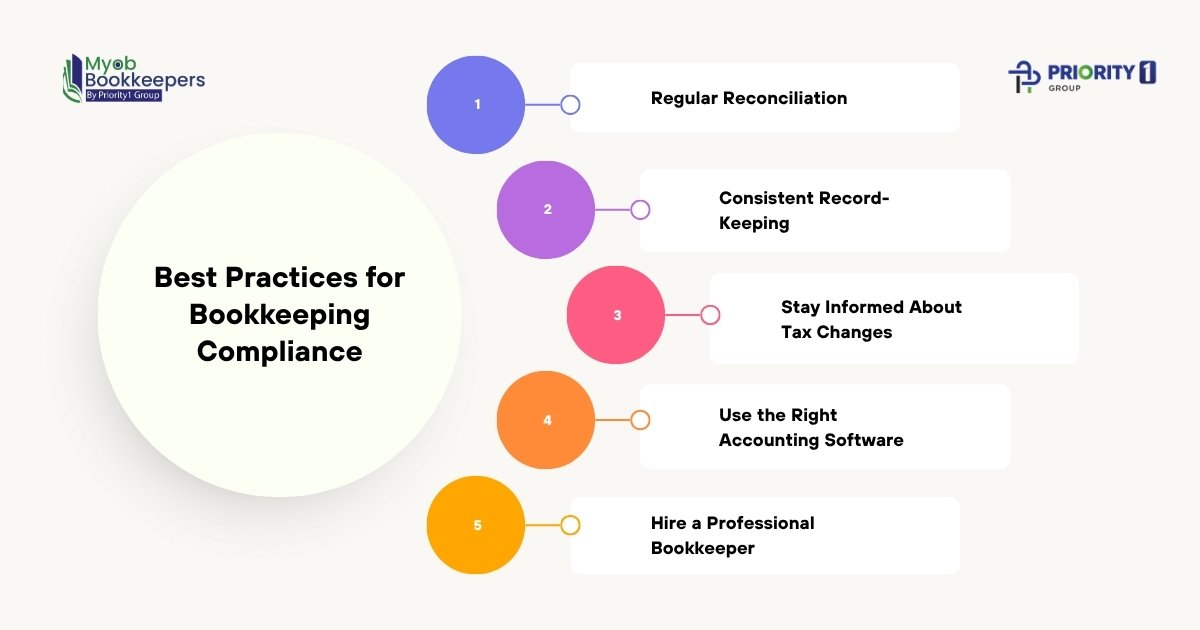
There are several best practices that businesses can implement to ensure they stay compliant with the ATO.
Here are some of the most important:
Compliance with the ATO’s regulations is not optional,it’s a requirement for every Australian business. Ignoring your bookkeeping duties and failing to meet deadlines can lead to penalties, stress, and unnecessary risk. But with the right processes, tools, and professional support, you can ensure that your business remains compliant and stays on top of its obligations.
For many businesses, partnering with a MYOB bookkeeper, like those from Myob Bookkeepers, part of Priority1 Group, can make all the difference. By outsourcing MYOB Bookeeping to certified professionals, you can focus on growing your business while ensuring your financial records remain accurate and compliant.
Remember, the ATO doesn’t care if you didn’t know, what matters is that you’re doing everything in your power to stay compliant and avoid costly mistakes.