
Cash flow problems rarely appear overnight. In most small businesses, the warning signs start quietly: customer payments slow down, supplier bills pile up, wages feel harder to cover, and the business begins relying on last-minute fixes. Left unchecked, these issues can affect operations, relationships, and long-term growth.
For Australian small businesses, cash flow is often the difference between stability and stress. A profitable business on paper can still run into trouble if money is not coming in at the right time. That is why business owners need to recognise the early signs before they become serious financial pressure points.
This guide explains the major cash flow warning signs small businesses should never ignore, why they matter, and what practical steps can help you regain control.
Cash flow is the movement of money in and out of your business. It affects your ability to pay staff, meet supplier obligations, lodge BAS, cover rent, invest in marketing, and respond to unexpected costs.
Many owners focus heavily on sales and revenue, but strong sales do not automatically mean healthy cash flow. If clients are paying late, margins are shrinking, or expenses are rising faster than income, the business can feel under pressure even during busy periods.
Healthy cash flow gives you options. Poor cash flow removes them. It can force short-term decisions that weaken the business over time, such as delaying supplier payments, skipping essential software upgrades, reducing staff support, or taking on expensive debt.
One of the clearest signs of cash flow strain is relying too heavily on overdue invoices. If your business is regularly waiting on customers to pay before you can meet your own obligations, your cash position is already vulnerable.
Late payments can create a chain reaction. You may delay supplier payments, struggle with payroll timing, or dip into savings to keep things running. This is especially risky for service-based businesses and trades that work on narrow margins.
Common red flags include:
To improve this, review your invoicing process, tighten payment terms where appropriate, and follow up sooner. The longer an invoice sits unpaid, the harder it often becomes to collect.
Many owners use personal money during the early stages of a business, but if this becomes a regular habit, it is a serious warning sign. Covering wages, bills, or tax obligations from your own account may keep things moving temporarily, but it can hide deeper financial issues.
This usually points to one or more of the following:
Blurring personal and business finances also makes bookkeeping less accurate. It becomes harder to assess the true financial position of the business and easier to miss patterns that need action.
A common frustration for small business owners is being fully booked or seeing steady sales while still feeling short on cash. This often happens when profit, timing, and spending are out of balance.
You might be busy, but if your margins are thin, your payment cycle is slow, or your expenses rise with every sale, the bank balance may not improve. Growth without control can actually increase financial pressure.
This is why accurate reporting matters. A skilled MYOB bookkeeper can help business owners understand whether the issue is timing, pricing, debtor management, or cost structure rather than assuming more sales will solve the problem.
Paying suppliers late once in a while may happen during a difficult period, but frequent delays are a major indicator of cash flow stress. When supplier payments are pushed back regularly, it can damage trust and reduce your bargaining power.
In some cases, suppliers may shorten your terms, stop offering credit, or place accounts on hold. That can affect stock availability, service delivery, and your reputation.
If you notice this pattern, review your outgoing payment schedule carefully. Separate essential costs from optional spending and compare supplier terms against your customer payment terms. A mismatch here is one of the most common causes of recurring pressure.
Wages should not come as a surprise. If every pay cycle feels like a scramble, your business is showing a serious cash warning sign.
Payroll stress is often linked to poor cash forecasting. Even if money eventually comes in, failing to plan around payroll dates can create unnecessary strain. It can also affect team morale if owners appear uncertain or reactive around pay periods.
Superannuation, leave entitlements, and payroll tax obligations also need to be factored into the bigger picture. When owners only focus on the immediate wage amount and ignore related costs, shortfalls become more likely.
Using a business overdraft or credit card strategically is not always a problem. But when credit becomes the main way to pay for routine expenses, it often signals an unhealthy dependency.
This becomes especially risky when debt is used to cover operating costs instead of growth investments. Interest charges then add pressure to an already weak cash position.
Ask yourself:
If the answer is unclear, it is time to look deeper into your reporting and spending habits.
Avoidance is a warning sign in itself. When business owners stop reviewing reports because they feel overwhelmed, the risk of missing important issues increases significantly.
Cash flow problems often worsen when visibility is low. If you are not reviewing aged receivables, unpaid bills, upcoming tax obligations, or weekly cash movements, decisions become reactive instead of informed.
This is where good bookkeeping support becomes valuable. Many small businesses benefit from regular oversight, especially when internal processes are inconsistent. Myob bookkeepers is a part of Priority1 Group, which supports businesses that want clearer financial visibility and stronger day-to-day control without making bookkeeping feel more complicated than it needs to be.
When BAS, super, or other obligations are repeatedly deferred, it usually points to cash pressure rather than a simple admin backlog. Falling behind on compliance can lead to penalties, interest, and extra stress at already difficult times.
These obligations should be planned for throughout the quarter, not treated as surprise expenses when deadlines arrive. If the business never seems ready, the underlying problem may be poor forecasting or incomplete records.
Working with a Certified MYOB bookkeeper can make it easier to track obligations early, maintain cleaner records, and reduce the chance of last-minute surprises.
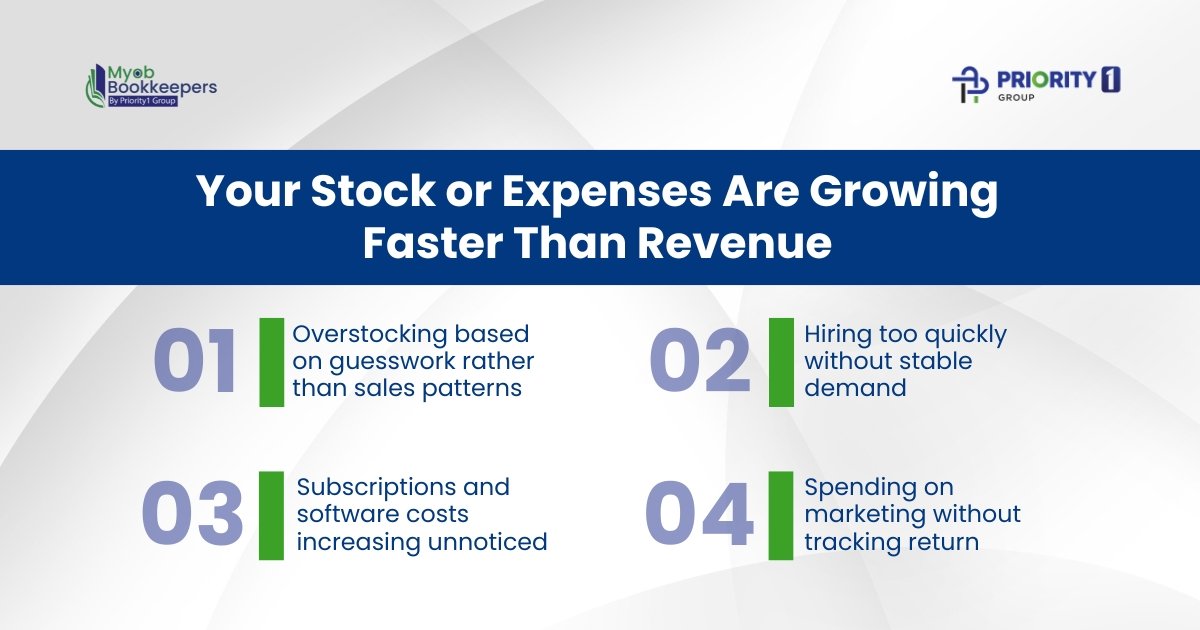
For product-based businesses, cash can get trapped in slow-moving stock. For service businesses, overheads can quietly expand without a matching increase in margin.
Warning signs include:
Not every expense is bad, but every expense should have a purpose. If costs are rising faster than collections or revenue quality, cash flow can tighten even during growth phases.
A business without a cash flow forecast is often reacting rather than planning. Forecasting does not have to be overly complex, but it should give you visibility over expected inflows, upcoming expenses, tax dates, and seasonal fluctuations.
Without a forecast, even predictable events can feel sudden. Rent, wages, software renewals, insurance, and supplier payments should all be mapped out. This helps you identify pressure points before they happen and make adjustments earlier.
A reliable forecast also helps owners make better decisions about hiring, expansion, and pricing.
Recognising the warning signs is important, but action matters more. Start with these steps:
Know who owes you money, how overdue invoices are, and what follow-up process is in place.
Compare when cash comes in against when major bills go out.
This makes it easier to protect core operations during tighter months.
Do not assume sales volume alone will fix a margin problem.
Accurate, up-to-date books lead to better decisions and fewer surprises.
Even a 12-week cash flow view can provide much-needed clarity.
A second MYOB bookkeeper review can also help identify issues that may be hard to spot from inside the business, especially when decisions are being made under pressure.
Cash flow trouble usually leaves clues before it becomes critical. Late customer payments, rising debt, payroll pressure, delayed tax obligations, and constant uncertainty around the bank balance are all signs that should be taken seriously.
The sooner these patterns are identified, the easier they are to address. Small changes in invoicing, forecasting, expense control, and reporting can make a meaningful difference to business stability.
For businesses that want cleaner systems and more confidence in their numbers, support from a certified MYOB bookkeeper can be a practical step forward. As part of the broader support available through Priority1 Group, that kind of bookkeeping guidance can help small business owners stay proactive, organised, and better prepared for the financial demands of growth.