

As the end of the financial year (EOFY) approaches, Australian small business owners need to prepare for tax time. This period can be stressful, but with the right steps and proper planning, the process can be smooth and manageable. In this guide, we’ll take you through essential tax time preparation steps and bookkeeping tips in order for a seamless tax season.
As an Australian small business owner, ensuring you are ready for tax time requires careful planning and a thorough review of your business’s financial situation. Below are key steps that will help you stay on top of your tax obligations and avoid common mistakes. From reviewing financial records to understanding tax deductions, here’s how to get started.
Before you start gathering information for your tax return, it’s essential to make sure your financial records are accurate and up to date. This includes checking your income statements, balance sheets, and other financial documents.
Having these documents in order will save you time when it’s time to file your tax return. A certified MYOB bookkeeper can help streamline this process and ensure that everything is properly categorized and reconciled.
As a small business owner, it’s essential to understand your tax obligations under Australian law. The key taxes to be aware of include:
Failure to comply with tax obligations can lead to penalties, so it’s vital that these taxes are handled correctly.
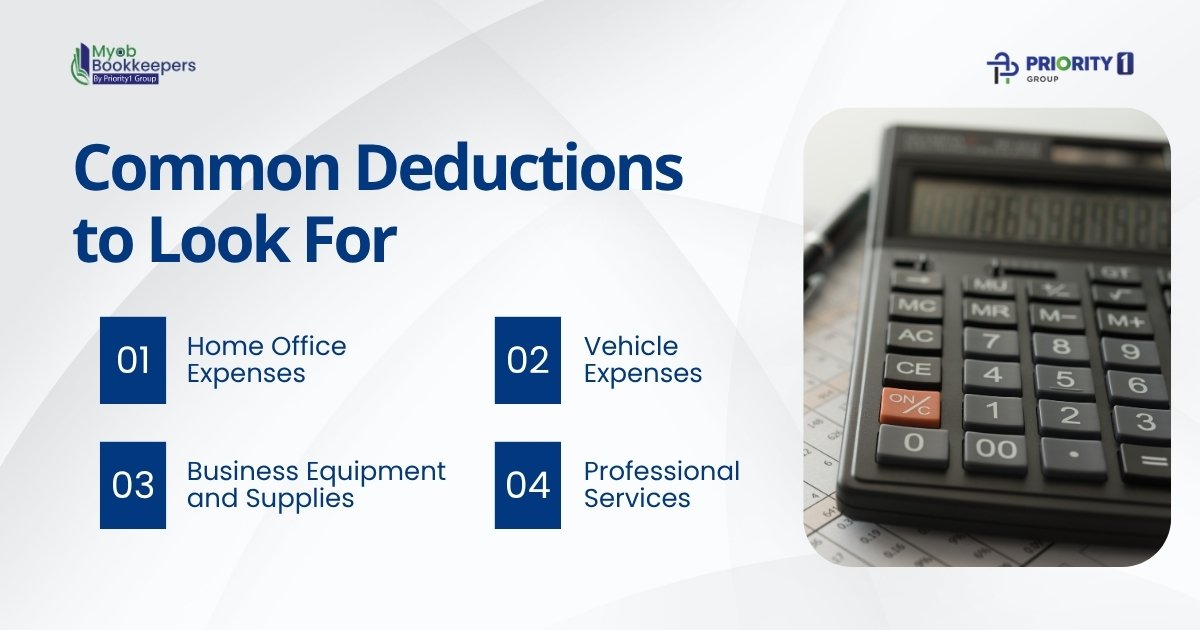
One of the most significant advantages of tax time preparation is identifying all the deductions your business is entitled to. Here are a few common deductions often overlooked by small business owners:
Make sure to review your records to ensure that all valid business expenses are included.
As an Australian business owner with employees, it’s crucial to make sure that payroll and superannuation contributions are up to date. The ATO requires that businesses make super contributions for their employees, and failure to comply can result in penalties.
Once your records are up to date, the next step is to organize your financial statements. This includes your Profit and Loss Statement, Balance Sheet, and Cash Flow Statement. These documents provide an overview of your business’s financial health and are critical for both tax reporting and business planning.
Before handing over your files to your accountant, it’s a good idea to do a final review and clean-up. This includes:
Having clean and well-organized financial records will help your accountant prepare your tax return more quickly and accurately.
Tax time can be daunting, but with the right preparation, it doesn’t have to be overwhelming. By keeping your financial records up to date, understanding your tax obligations, identifying all available deductions, and organizing your financial statements, you can minimize stress and maximize efficiency.
For small business owners, working with an experienced bookkeeper is an invaluable way to ensure that your finances are in order for tax time. A professional bookkeeper can handle all the detailed tasks that you may overlook, ensuring that everything is accurate and compliant with ATO requirements.
At Priority1 Group, we understand how important it is to get tax time right. That’s why Myob Bookkeepers, a part of Priority1 Group, offer expert bookkeeping services tailored for small business owners. With us, you can rest assured that your tax time preparation is in the hands of professionals who understand your needs.
By following these tips and working with a professional bookkeeper, you can ensure that your small business’s tax time preparation is smooth and successful. Don’t wait until the last minute, start your preparations now to save time, money, and stress come tax season.