Starting a new business in Australia is exciting, but it also comes with important financial responsibilities. From tracking income and expenses to managing payroll, GST, invoices and reports, having the right bookkeeping system from the beginning can save you time, reduce errors and support better business decisions.
MYOB is one of the commonly used accounting and bookkeeping platforms for Australian businesses. It helps business owners manage day-to-day financial tasks, stay organised and maintain clearer records. However, simply signing up for MYOB is not enough. The way you set it up matters.
A poor setup can lead to incorrect reports, messy reconciliations, payroll issues and compliance stress later. A proper setup gives your business a clean foundation from day one.
This checklist will help new Australian businesses understand the key steps involved in setting up MYOB properly and why each step is important.
Many new business owners focus on sales, operations and customer service in the beginning. Bookkeeping often becomes something they “sort out later”. The problem is that financial records build up quickly.
If your MYOB file is not set up correctly, small mistakes can become bigger issues over time. For example, incorrect GST settings may affect BAS reporting, unclear expense categories may make reports difficult to understand, and payroll errors may create problems with employee records.
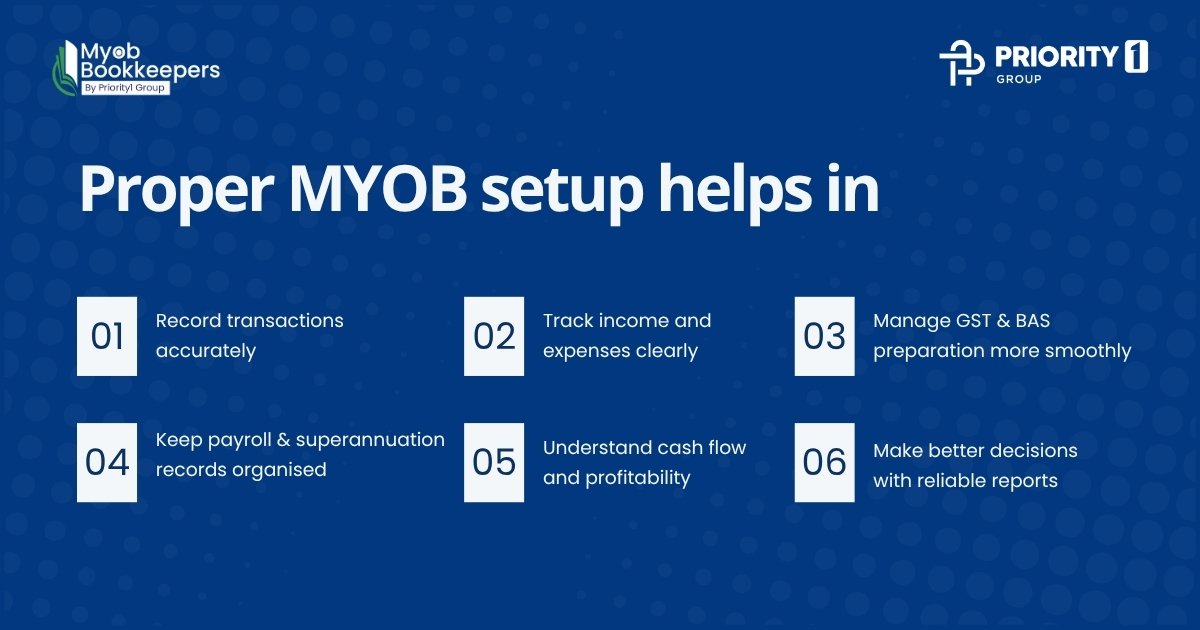
A proper MYOB setup helps your business:
Good bookkeeping is not just about compliance. It is also about knowing where your money is going and whether your business is growing in the right direction.
The first step is entering accurate business information into MYOB. This includes your business name, ABN, business structure, contact details and financial year settings.
Make sure your ABN and registered business name match your official records. If your details are incorrect from the start, it may create confusion in invoices, reports and tax-related documents.
You should also confirm your financial year settings. Most Australian businesses follow the financial year from 1 July to 30 June, but it is still important to check this when setting up your file.
At this stage, also review whether your business is registered for GST. If your business is registered, MYOB should be set up to track GST correctly from the beginning.
MYOB offers different plans depending on your business needs. A sole trader with simple income and expenses may not need the same setup as a business with employees, inventory or multiple locations.
Before choosing a plan, consider:
Choosing the wrong plan can either limit what you can do or make you pay for features you do not need. It is better to think about both your current needs and your expected growth over the next 12 months.
If you are unsure, this is where professional support can help. Myob Bookkeeper is a part of Priority1 Group, supporting Australian businesses with organised bookkeeping systems and MYOB setup guidance.
Your chart of accounts is the foundation of your bookkeeping system. It is the list of categories used to organise your business transactions, such as income, expenses, assets, liabilities and equity.
For a new business, it may be tempting to use every default account available in MYOB. However, too many categories can make reporting confusing. On the other hand, too few categories may not give you enough detail.
Your chart of accounts should reflect how your business operates. For example, a café may need categories for food supplies, wages, merchant fees and rent. A service business may need categories for subcontractors, software, advertising and professional fees.
Common account categories include:
A well-structured chart of accounts makes reports easier to read and helps you understand your business performance more clearly.
Connecting your business bank account to MYOB can save time and reduce manual data entry. Bank feeds allow transactions to flow directly into MYOB so they can be matched, coded and reconciled.
Before connecting bank feeds, make sure you are using a dedicated business bank account. Mixing personal and business expenses can make bookkeeping harder and may create issues when preparing reports or providing records to your accountant.
Once bank feeds are active, set clear rules for common transactions. For example, regular software subscriptions, rent payments or merchant fees can be coded consistently.
However, automation should still be reviewed. Bank rules are helpful, but they are not a replacement for careful checking. Incorrect rules can repeat the same mistake every month if no one reviews them.
GST settings are one of the most important parts of MYOB setup for Australian businesses. If your business is registered for GST, you need to ensure that sales, purchases and reports are set up correctly.
Incorrect GST coding can affect your BAS and may create unnecessary stress at reporting time. For example, some purchases may include GST, some may be GST-free, and others may be outside the GST system.
Make sure you understand which tax codes apply to your business transactions. If you are unsure, speak with a qualified tax professional or accountant. A bookkeeper can help organise the records, but tax advice should come from the right professional.
Good GST setup supports cleaner BAS preparation and gives your accountant better information when needed.
Professional invoices help your business look organised and make it easier for clients to pay you on time. MYOB allows you to customise invoice and quote templates with your business name, logo, payment details and terms.
Your invoice should include:
Clear payment terms are important. For example, you may choose 7-day, 14-day or 30-day payment terms depending on your business model.
You should also decide how you will follow up overdue invoices. A simple process for reminders can improve cash flow and reduce awkward payment conversations.
Adding customer and supplier details into MYOB keeps your records organised and helps you track money coming in and going out.
For customers, include accurate names, contact details, payment terms and billing information. For suppliers, record business names, ABNs, payment details and contact information.
This is especially useful if you work with repeat customers or regular suppliers. Instead of manually entering the same details every time, you can select the saved contact and keep transactions consistent.
Clean customer and supplier records also make it easier to review outstanding invoices, supplier payments and business relationships.
If your business has employees, payroll setup must be handled with care. Payroll involves wages, PAYG withholding, superannuation, leave entitlements and Single Touch Payroll reporting.
In MYOB, you will need to set up employee details, pay categories, leave categories, super funds and tax information. You should also confirm whether employees are full-time, part-time or casual.
Payroll mistakes can affect employee trust and create compliance concerns. That is why it is important to review award requirements, pay rates, allowances and superannuation obligations before processing wages.
If more than one person will access MYOB, it is important to set proper user permissions. Not everyone needs full access to financial data.
For example, a staff member may only need access to create invoices, while a bookkeeper may need access to reconcile bank transactions and prepare reports. Your accountant may need access at reporting time.
Setting user permissions protects sensitive financial information and reduces the risk of accidental changes. It also creates accountability because actions can be linked to specific users.
As your business grows, review access regularly. Remove users who no longer need access and update permissions when roles change.
Good bookkeeping is not only about entering numbers. It is also about keeping evidence for transactions. Receipts, invoices, bills, contracts and payment records should be stored properly.
MYOB allows you to attach documents to transactions, which can make record-keeping easier. This is useful when reviewing expenses, preparing reports or responding to accountant queries.
Create a simple habit from the beginning. Each time a bill is entered or an expense is recorded, attach the supporting document where possible.
This reduces the risk of missing paperwork later and makes your financial records easier to review.
Once MYOB is set up, the next step is maintaining it regularly. Bookkeeping should not be left until the end of the quarter or financial year.
A simple monthly routine can include:
Regular bookkeeping gives you better visibility and helps you fix errors early. It also makes BAS and end-of-year preparation much smoother.
MYOB reports are useful only when the data entered is accurate. Before making business decisions based on reports, review the setup and transaction coding.
Important reports include:
These reports can help you understand whether your business is profitable, whether customers are paying on time, and whether expenses are increasing.
New businesses often make avoidable mistakes during setup. Some of the most common include using the wrong GST codes, creating too many account categories, mixing personal and business transactions, not reconciling regularly and failing to attach supporting documents.
Another common mistake is relying too heavily on automation without review. Bank feeds and rules are useful, but they still need human oversight.
Setting up MYOB properly is one of the smartest steps a new Australian business can take. It creates a strong financial foundation, supports accurate reporting, improves cash flow visibility and makes compliance-related tasks easier to manage.
From choosing the right plan and setting up your chart of accounts to managing payroll, GST, invoices and reports, each step plays an important role in keeping your business organised.
For new businesses that want reliable support without building a full internal finance team, Priority1 Group offers practical bookkeeping assistance through Myob Bookkeepers. With the right setup and ongoing support, your business can spend less time fixing records and more time focusing on growth