
Accurate financial reporting is the backbone of every well-managed business. Yet even small mistakes in GST coding can quietly distort reports, misrepresent cash flow, and create compliance risks. Many business owners only discover these issues when something doesn’t add up, often too late, during reconciliation or tax time.
Understanding how GST coding errors occur, and more importantly how to prevent them, is essential for maintaining reliable financial data. This article explores the most common mistakes, their impact, and how businesses can safeguard their reporting accuracy.
GST coding directly influences how transactions appear in your financial reports. Each code determines whether a transaction is taxable, non-taxable, or exempt, and whether GST is collected or claimed.
When GST is coded incorrectly, it can affect:
Even a minor misclassification can snowball into larger discrepancies, leading to incorrect tax obligations or misleading financial decisions.
One of the most frequent errors is applying GST to transactions that should be GST-free or input taxed, or vice versa. For example, treating a GST-free expense as taxable can inflate your GST credits incorrectly.
This often happens when:
Accounting software often assigns default GST codes to speed up data entry. While convenient, these defaults can become problematic if not reviewed regularly.
For instance:
Without proper oversight, these defaults can quietly introduce consistent errors across multiple transactions.
Not all business expenses are eligible for GST credits. Claiming GST where it shouldn’t be claimed can lead to compliance issues and potential penalties.
Common examples include:
These errors often arise from a lack of clarity about what qualifies for GST credits.
Manual data entry increases the risk of duplication or omission. A transaction might be recorded twice with GST applied both times, or recorded without GST when it should have been included.
This can result in:
International transactions introduce additional complexity. Imports, exports, and overseas services each have specific GST treatments.
Errors occur when:
These mistakes can significantly distort both tax reporting and financial statements.
GST errors don’t just affect tax compliance, they influence how you interpret your business performance.
Incorrect GST coding can inflate or deflate expenses and revenue. This leads to inaccurate profit calculations, which can misguide decision-making.
GST liabilities and credits directly affect cash flow. Errors can create the illusion of stronger or weaker liquidity than actually exists.
Your BAS relies on accurate GST data. Errors in coding can result in:
Inconsistent or incorrect GST coding raises red flags during audits. This can lead to additional scrutiny, increased workload, and potential financial consequences.
GST coding mistakes are rarely obvious in day-to-day operations. They tend to accumulate gradually and surface only when:
Many businesses rely heavily on software automation, assuming accuracy without regular checks. However, automation is only as reliable as the setup behind it.
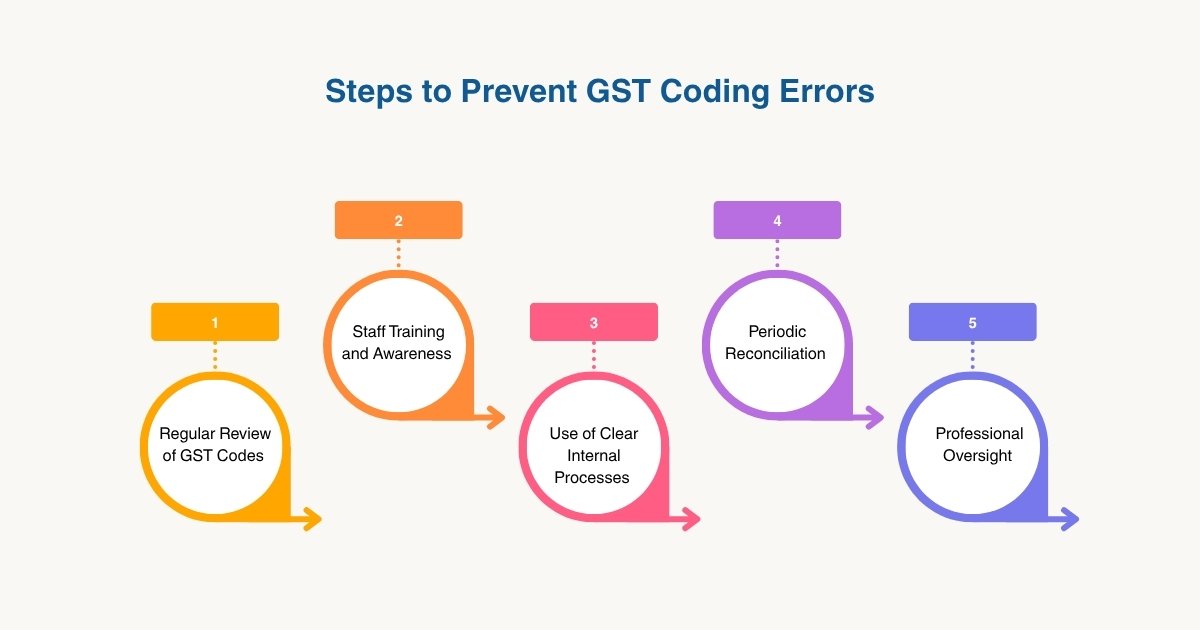
Set aside time to review GST codes applied to transactions. Look for inconsistencies and patterns that may indicate errors.
Ensure that anyone handling financial data understands GST basics. Even a general awareness can significantly reduce coding mistakes.
Create standard procedures for:
Consistency in processes helps minimise guesswork and errors.
Regular reconciliation helps catch discrepancies early. Comparing GST reports with actual transactions can highlight issues before they escalate.
Many businesses find value in having an experienced bookkeeper review their records periodically. This adds an extra layer of accuracy and ensures compliance standards are maintained.
At this point, it’s worth noting that MYOB Bookkeeper operates as part of Priority1 Group, offering structured support that helps businesses maintain clean and reliable financial data without disrupting daily operations.
A well-configured accounting system plays a major role in preventing GST errors.
If GST codes and categories are set up correctly from the beginning, the risk of ongoing errors is significantly reduced.
Every business is different. Tailoring GST settings to match your operations ensures transactions are coded appropriately.
Automation can improve efficiency, but it should always be paired with periodic review. Blind reliance on automated coding can lead to repeated mistakes.
If GST errors have already affected your reports, it’s important to address them promptly. Signs that you may need support include:
Engaging a certified MYOB bookkeeper can help identify underlying issues, correct past errors, and establish processes that prevent future problems.
GST coding errors can quietly distort your financial reports, leading to inaccurate insights and potential compliance risks. While these mistakes are common, they are also preventable with the right processes, awareness, and periodic review.
By understanding where errors typically occur and taking proactive steps to address them, businesses can maintain accurate records and avoid costly corrections. Reliable GST coding not only supports compliance but also strengthens the overall quality of financial reporting.
For businesses seeking consistency and clarity, having the right support system in place can make a measurable difference, turning GST management from a reactive task into a structured and dependable process.