
Keeping your MYOB file clean is one of the simplest ways to reduce stress in your business. When records are current, correctly coded, and properly supported, your accountant can review them faster, your reports become more reliable, and you spend less time fixing preventable errors.
Many businesses only notice bookkeeping problems when BAS is due, payroll figures do not match, or the accountant asks questions that should have been easy to answer. In most cases, the issue is not one major error. It is a buildup of small habits such as unreconciled transactions, duplicate entries, unclear expense coding, and missing documents.
A clean file creates confidence. It gives you a clearer picture of cash flow, supports compliance, and makes year-end work easier.
The goal is : keep your file accurate enough that your accountant can review it without needing a cleanup first.
A clean MYOB file begins with the way it is set up. If the structure is messy, daily bookkeeping becomes inconsistent and reporting becomes harder to trust.
What a clean structure should include
Your file should have:
Too many businesses keep adding accounts over time without reviewing whether they are still useful. This creates clutter and increases miscoding. A simpler structure is usually more effective than a long list of categories no one fully understands.
Reconciliation is one of the most important habits in bookkeeping. It ensures that the balances in MYOB match your actual bank activity and highlights problems before they grow.
Why reconciliation matters
Without regular reconciliation, you may miss:
When reconciliations are delayed, errors become harder to trace. A transaction entered today is easy to review. The same transaction questioned six months later often becomes a frustrating investigation.
Best practice for reconciliation
For most businesses, bank and credit card accounts should be reviewed at least monthly. Higher-volume businesses may benefit from weekly checks. The key is consistency. Accurate reconciliations keep your reports credible and reduce the amount of work your accountant needs to do later.
A file may look complete on the surface and still be unreliable if transactions are coded inconsistently. This is one of the most common reasons reports become misleading.
Common coding problems
Some of the usual issues include:
Coding consistency matters because it affects the quality of every profit and loss report and balance sheet you review. If your numbers are not categorised correctly, the reports may still look polished while telling the wrong story.
How to improve coding accuracy
Create internal rules for regular transactions. Decide how common expenses should be treated and apply that method every time. Review unusual or high-value items before month end rather than leaving them unresolved.
Bookkeeping is not only about what appears in the software. It is also about the records behind each transaction. If invoices, receipts, and statements are difficult to find, even a mostly accurate MYOB file can create delays.
Documents you should keep organised
Make sure you can easily locate:
Why this matters for accountant review
When your accountant reviews the file, they may need to verify balances, confirm the nature of a transaction, or trace an unusual movement. If the document trail is incomplete, the review becomes slower and more expensive.
A clean MYOB file is supported by a clean record-keeping process. Good bookkeeping is easier to maintain when both are working together.
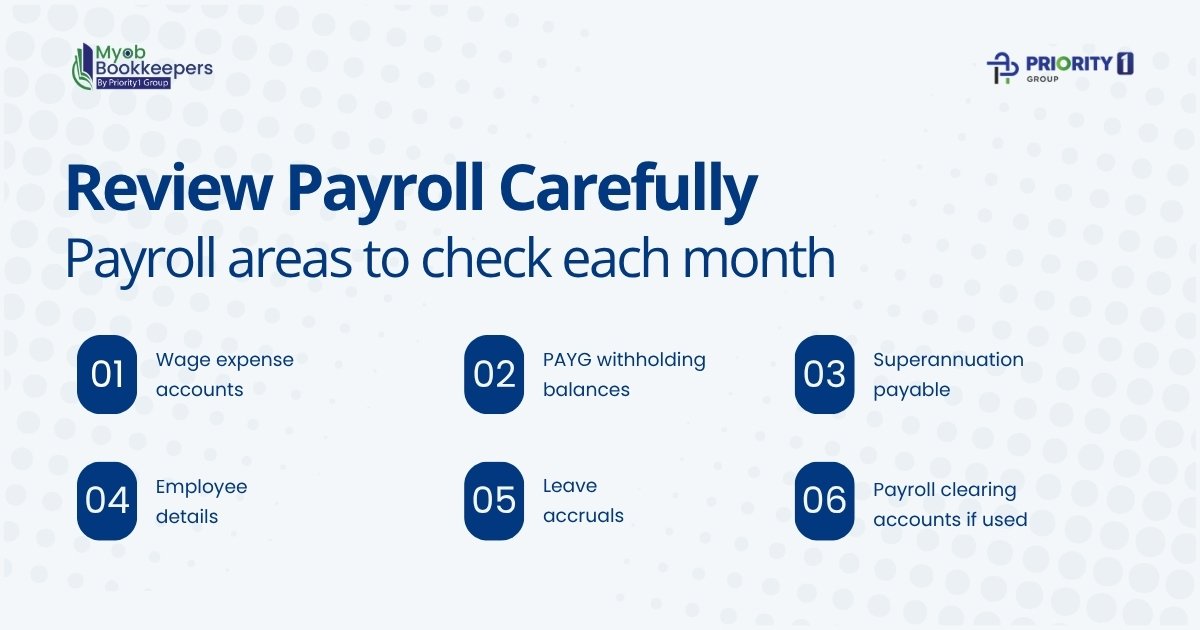
Payroll errors can create some of the most time-consuming bookkeeping issues. Wages, super, PAYG withholding, and leave balances all need to align with what has been processed and reported.
Payroll areas to check each month
Review the following regularly:
Even one incorrect payroll setup can flow into multiple reporting problems. That is why payroll should never be treated as a background task once it has been processed.
Accounts receivable and accounts payable often reveal the real condition of a bookkeeping file. Aged reports filled with old balances usually indicate that transactions have not been matched or reviewed properly.
What to look for in debtor and creditor reports
Check for:
Cleaning up these reports improves more than presentation. It strengthens cash flow visibility and helps ensure the balance sheet reflects real obligations and expected income.
One of the easiest ways to stay accountant-ready is to create a recurring monthly review process. This prevents last-minute pressure and helps catch issues while they are still small.
A practical monthly bookkeeping checklist
At the end of each month, review:
This kind of routine brings structure to your bookkeeping and improves reporting discipline over time.
It is also where many businesses realise the value of ongoing support. Myob Bookkeepers is a part of Priority1 Group, and that broader connection can be helpful for businesses that want bookkeeping processes to stay organised, accurate, and ready for professional review rather than patched together only when deadlines appear.
A good bookkeeping process does not wait until tax time to become organised. The best results come when your records are maintained in a way that already suits your accountant’s review process.
Questions worth asking your accountant
Ask them:
This approach saves time and creates better communication. Instead of sending a file and hoping it is good enough, you are preparing records with a clear purpose.
Many bookkeeping issues are not difficult to fix. The real problem is delay. When businesses postpone reviews, small problems become larger corrections. Keeping your file clean is less about perfection and more about regular attention.
The more organised your monthly process is, the less likely your accountant will need to spend valuable time correcting avoidable errors.
An accountant-ready MYOB file is built through structure, consistency, and regular review. Clean reconciliations, accurate coding, organised documents, and careful payroll checks all contribute to stronger records and better reporting.
This is also why many businesses choose to involve a Certified MYOB bookkeeper before problems build up. Ongoing attention is usually more efficient than a major cleanup later, especially when the goal is to keep reports reliable and compliance obligations under control.
Myob Bookkeepers is a part of Priority1 Group, which reflects a practical approach to bookkeeping support: keeping financial records clean, usable, and easier for accountants to review without unnecessary complications. When your MYOB file stays organised all year, your accountant can spend less time fixing data and more time helping you understand the numbers that matter.