Running a small business often means balancing customer demands, staff management, operations, and financial responsibilities all at once. For many Australian business owners, bookkeeping becomes something that gets delayed until BAS deadlines or end-of-year reporting approaches. Unfortunately, leaving financial records unattended for too long can lead to cash flow confusion, payroll mistakes, missed payments, and unnecessary stress around ATO obligations.
Creating a structured monthly bookkeeping process helps businesses stay organised and maintain better financial control throughout the year. Working with a professional bookkeeper can also make it easier to manage reporting requirements while reducing the administrative burden on business owners. Rather than trying to catch up on weeks of paperwork, businesses that maintain accurate monthly records are usually better prepared to make informed financial decisions and respond to operational challenges quickly.
Good bookkeeping is not only about compliance. It also creates visibility, consistency, and confidence in the financial health of the business.
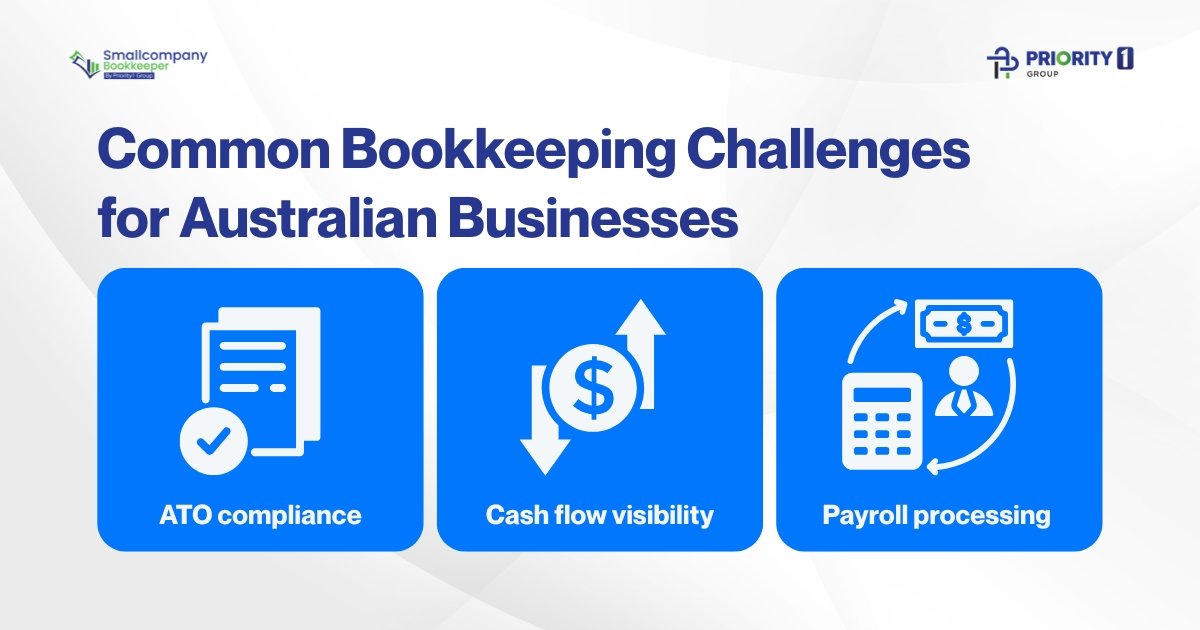
Many Australian SMEs experience similar bookkeeping problems as they grow. One of the biggest challenges is finding the time to maintain accurate records while handling day-to-day business operations. When bookkeeping tasks are delayed, mistakes often accumulate and become more difficult to fix later.
ATO compliance is another common concern. Businesses must manage BAS lodgement, maintain accurate GST records, process payroll correctly, and meet Single Touch Payroll (STP) obligations throughout the year. Missing deadlines or reporting incorrect figures can create unnecessary pressure and may lead to penalties or compliance reviews.
Cash flow visibility is also a major issue for many small businesses. Without regular reconciliation of accounts, invoices, and expenses, it becomes difficult to understand how much money is coming in, what expenses are overdue, and whether the business is operating profitably. This lack of visibility can affect budgeting, staffing decisions, and future planning.
Payroll processing creates additional complexity. Incorrect superannuation calculations, leave tracking errors, and incomplete employee records can create both operational and compliance problems. End-of-year reporting often becomes far more stressful when payroll records have not been maintained consistently throughout the financial year.
A structured monthly bookkeeping routine helps reduce these risks while creating more reliable financial processes across the business.
Maintaining accurate financial records becomes far easier when bookkeeping tasks are completed consistently each month. A structured checklist helps business owners stay organised while improving reporting accuracy and financial visibility.
Review all bank accounts, credit cards, and payment platforms monthly to ensure transactions match accounting records. Regular reconciliation helps identify duplicate entries, missing transactions, or incorrect charges before they create larger issues.
Check unpaid customer invoices and follow up on overdue accounts promptly. Consistent invoice management supports healthier cash flow and reduces the risk of long-outstanding debts affecting business operations.
Review supplier invoices, receipts, and operating expenses each month to ensure transactions are categorised correctly. Accurate expense tracking simplifies BAS preparation and improves financial reporting accuracy.
Payroll should be reviewed carefully every month, including wages, superannuation contributions, leave balances, and STP reporting. Even small payroll mistakes can create compliance complications if left unresolved.
Review monthly profit and loss statements, cash flow summaries, and operating expenses to understand the financial position of the business. Working with a dedicated MYOB bookkeeper can help ensure these reports remain accurate, organised, and useful for decision-making throughout the year.
Consistent monthly reporting also makes it easier to prepare for tax obligations, budgeting discussions, and future growth planning.
Not all bookkeeping support provides the same level of expertise. Business owners should look for professionals who understand Australian compliance requirements, payroll obligations, and financial reporting standards in detail. Software knowledge alone is not always enough when accuracy directly affects business performance and compliance.
A certified MYOB bookkeeper has completed formal training and understands how to use the platform effectively within an Australian business environment. This includes managing payroll functions, preparing BAS information, reconciling accounts, and maintaining accurate financial records throughout the year.
Certification also demonstrates ongoing professional knowledge. Tax regulations, payroll legislation, and reporting requirements continue to evolve, so businesses benefit from working with someone who stays current with industry changes and compliance expectations.
Experienced bookkeeping professionals also help create more consistent financial systems. Clear processes for invoice tracking, payroll management, reconciliations, and document storage reduce the likelihood of reporting errors or missing information. This consistency helps business owners maintain stronger financial visibility and reduces pressure during end-of-year reporting periods.
Communication and reliability are equally important. Businesses often benefit most from bookkeeping support that explains financial information clearly and provides timely reporting throughout the year.
Selecting a bookkeeping service involves more than comparing pricing structures. Business owners should look for professionals who understand their industry, communicate clearly, and maintain strong knowledge of Australian compliance requirements.
When reviewing bookkeeping providers, it is important to ask about payroll management processes, BAS preparation experience, reporting systems, and how frequently accounts are reconciled. Businesses should also confirm how financial records are reviewed and whether reporting deadlines are actively monitored.
Working with a certified MYOB bookkeeper can provide additional peace of mind because it demonstrates both technical platform expertise and a strong understanding of Australian bookkeeping standards. This level of experience often helps businesses maintain better financial organisation while reducing the likelihood of reporting issues or compliance concerns.
Responsive communication also matters. Small business owners benefit from working with bookkeeping professionals who can answer questions promptly and explain financial reports in a practical, straightforward manner.
Strong bookkeeping habits support far more than compliance alone. They help businesses maintain financial clarity, improve operational decision-making, and reduce unnecessary administrative stress throughout the year. A structured monthly bookkeeping checklist allows business owners to stay proactive rather than reactive when managing finances.
Consistent financial management also supports better planning for cash flow, staffing, tax obligations, and future business growth. As part of Priority1 Group, MYOB Bookkeepers brings together a broader network of business support to help Australian businesses thrive.
For businesses looking to improve financial organisation and reduce bookkeeping pressure, reviewing current bookkeeping processes can be a valuable first step. Small improvements in monthly financial management often create stronger long-term business stability and confidence.