
Business Activity Statement (BAS) reporting is one of those tasks that can feel “routine” until something goes wrong. A missed GST figure, a wrongly coded transaction, or a forgotten PAYG instalment can create stress, cash flow pressure, and time-consuming clean-ups. The good news is that BAS doesn’t have to be complicated especially if your bookkeeping is consistent and your MYOB file is set up properly.
This guide explains how BAS reporting works in Australia, how MYOB supports BAS preparation, and the practical steps you can follow to make your reporting smoother, more accurate, and easier to review. The aim is not just compliance, but confidence knowing your numbers are reliable and your BAS is based on clean data.
Your BAS is the form lodged with the ATO that reports and pays certain tax obligations, depending on how your business is registered. What appears on your BAS can vary, but commonly includes:
The BAS itself isn’t the hardest part what really matters is keeping your records accurate and compliant throughout the reporting period, see what most business owners get wrong about bookkeeping compliance .
If your invoices, bills, bank transactions, and payroll entries are incomplete or coded incorrectly, your BAS becomes a guesswork exercise—and that’s where risk starts.
MYOB is widely used by Australian businesses because it supports GST tracking, payroll compliance, reporting, and bank feeds in a single workflow. When set up properly, MYOB can help you:
The key phrase is “set up properly.” BAS accuracy depends on how your file is configured and how consistently transactions are processed.
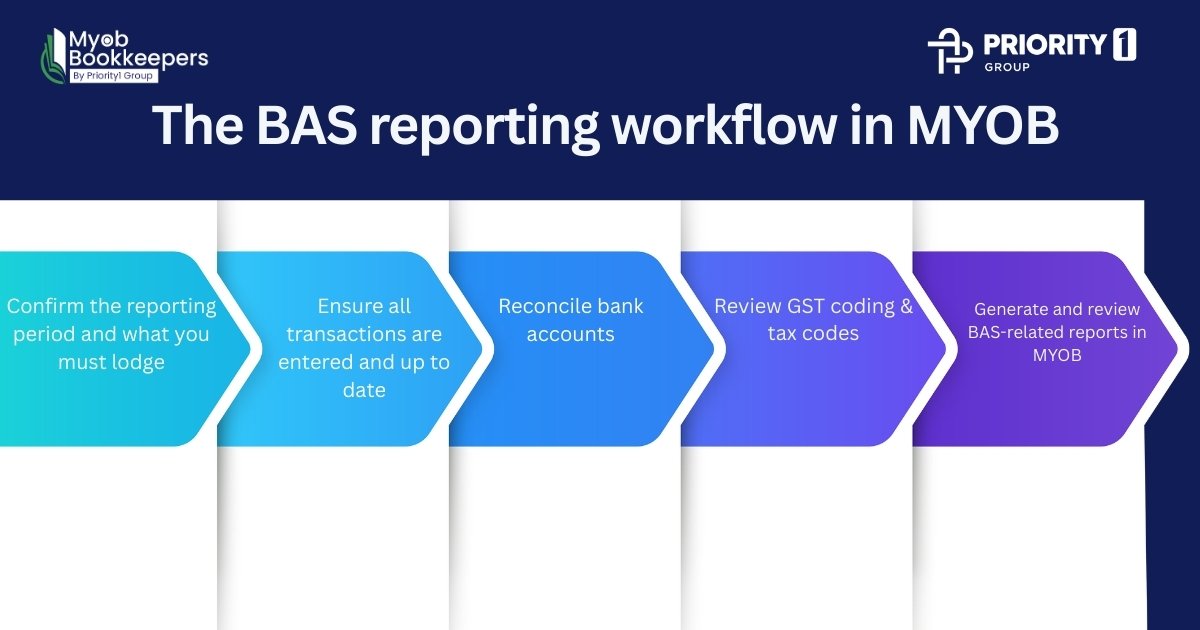
A clean BAS process usually follows the same rhythm each period—monthly or quarterly.
Start by confirming your BAS cycle and what obligations appear on your BAS. Your registration details with the ATO determine this. If you’re unsure, your BAS agent or registered tax professional can confirm what applies.
Before you even look at BAS reports, make sure your books are complete for the period:
Incomplete books produce incomplete BAS.
Bank reconciliation is one of the most effective ways to confirm your data is accurate. It helps you ensure:
If you skip reconciliations, BAS preparation becomes riskier because you’re relying on unverified numbers.
Most BAS mistakes come from coding issues. Common examples include:
A quick tax code review before generating BAS reports can prevent painful amendments later.
MYOB provides reports that support BAS preparation. The names can vary slightly depending on your MYOB version and setup, but typically you’ll use reports that show:
The smartest practice is to review the report logic, not just the totals. If a number looks unusual, drill into the transactions behind it.
This is the most frequent issue and the easiest to fix with better habits. Prevention comes down to:
A simple rule: don’t “force” GST to make the BAS look right. Fix the transactions so the BAS is naturally correct.
Your GST reporting method (cash vs accrual) changes how GST is counted. If your business reports GST on a cash basis, you generally recognise GST when payments occur, not when invoices are raised.
Make sure your bookkeeping process matches your GST reporting method—especially if your invoicing and payment cycles differ.
If anyone can edit old transactions after BAS is prepared, your figures can shift without notice. This creates confusion later, especially when comparing reports or preparing year-end records.
A clean BAS process includes:
PAYG withholding totals depend on accurate payroll processing and correct timing. Errors occur when pay runs are:
If payroll is part of your BAS obligations, treat payroll checks as part of the BAS checklist.
BAS becomes easy when you do the same steps, every period. A practical checklist for MYOB users looks like this:
This routine reduces errors, shortens preparation time, and helps you stay audit-ready.
Some businesses can manage BAS smoothly in-house, especially with a consistent process. Others benefit from support when:
Midway through improving your BAS process, it’s often helpful to have an expert review your MYOB setup and workflows. That’s where MYOB Bookkeepers (part of Priority1 Group) often supports Australian businesses, helping refine categories, tax codes, reconciliations, and reporting routines so your BAS is prepared from clean, reliable data rather than last-minute scrambling. For many owners, working with a certified MYOB bookkeeper turns BAS preparation from a stressful deadline into a predictable monthly or quarterly rhythm.
BAS reporting isn’t just about lodging. When your BAS figures are accurate, your books become more useful for running the business. Clean GST tracking and reconciled accounts can help you:
When BAS preparation is built into your bookkeeping system, reporting becomes a by-product of good habits, not an emergency project.
One common reason BAS time feels stressful is that business owners confuse strong sales with strong cash position. It’s easy to assume that a busy month automatically means you’re doing well, but profit and cash flow don’t always move together especially when stock, payroll, GST timing, and supplier terms are involved. If you want a clearer explanation of why this happens (and how to avoid being caught off guard), read The Cash Flow Trap: When Monthly Sales Don’t Equal Monthly Profit for a practical breakdown of where the numbers can mislead and what to monitor more closely.
If you want BAS to be easier long-term, focus on these foundations:
A messy chart of accounts leads to messy coding. Keep categories meaningful and aligned to how you want to review your business performance.
Decide how transactions will be entered (bank feeds vs bills vs manual entries) and be consistent. Mixing methods without rules can create duplicates or misallocations.
If multiple staff enter transactions, small differences in coding habits can distort BAS results. A short internal guideline can prevent repeated mistakes.
Weekly reconciliations are ideal for active businesses. Monthly at a minimum. The sooner you catch issues, the easier they are to fix.
BAS reporting is far less stressful when your MYOB records are clean, reconciled, and consistently coded. The BAS form itself is only reflecting what’s already in your books—so the real goal is building a bookkeeping system that produces reliable figures every period.
When you treat BAS as a regular process supported by reconciliations, tax code checks, and a repeatable checklist you reduce the risk of errors, avoid amendments, and gain clearer insights into how your business is tracking.
If you’d like BAS reporting to feel simpler and more controlled, the most effective step is improving the quality of the data feeding into it. That’s why many Australian businesses choose support through MYOB Bookkeepers, which is part of Priority1 Group because the focus is practical: building better routines, setting up MYOB properly, and keeping reporting accurate without overcomplicating it. When you have dependable MYOB bookkeeping services behind you, BAS becomes a straightforward outcome of a well-run system rather than a last-minute scramble. And if you’re already working with a certified MYOB bookkeeper, the ideal result is the same: consistent records, accurate reporting, and confidence every time a BAS deadline arrives.